The Knot Worldwide
AURA — AI Research Intelligence Platform
Research was slow, siloed and hard to reuse. The hard part wasn't the technology — it was trust. 30% of the project was workshops and demos, not screens.
- Role
- Product Designer, embedded with the User Research team
- Timeline
- 6-week MVP → ongoing iteration
- Team
- UX Research Lead, 2 Backend Engineers (part-time), Customer Success, PMs
- Tools
- Figma, Claude Code, Cursor, Slack, Jira
3-4 wks → 5-7 days
research cycle
+60%
insight reuse across teams
PMs & Support
now launch studies alone
Impact:
- Research cycle: 3-4 weeks → 5-7 days
- Insights reuse: +60% across teams
- Democratized research: PMs, Support, Ops now launch studies independently
The Challenge
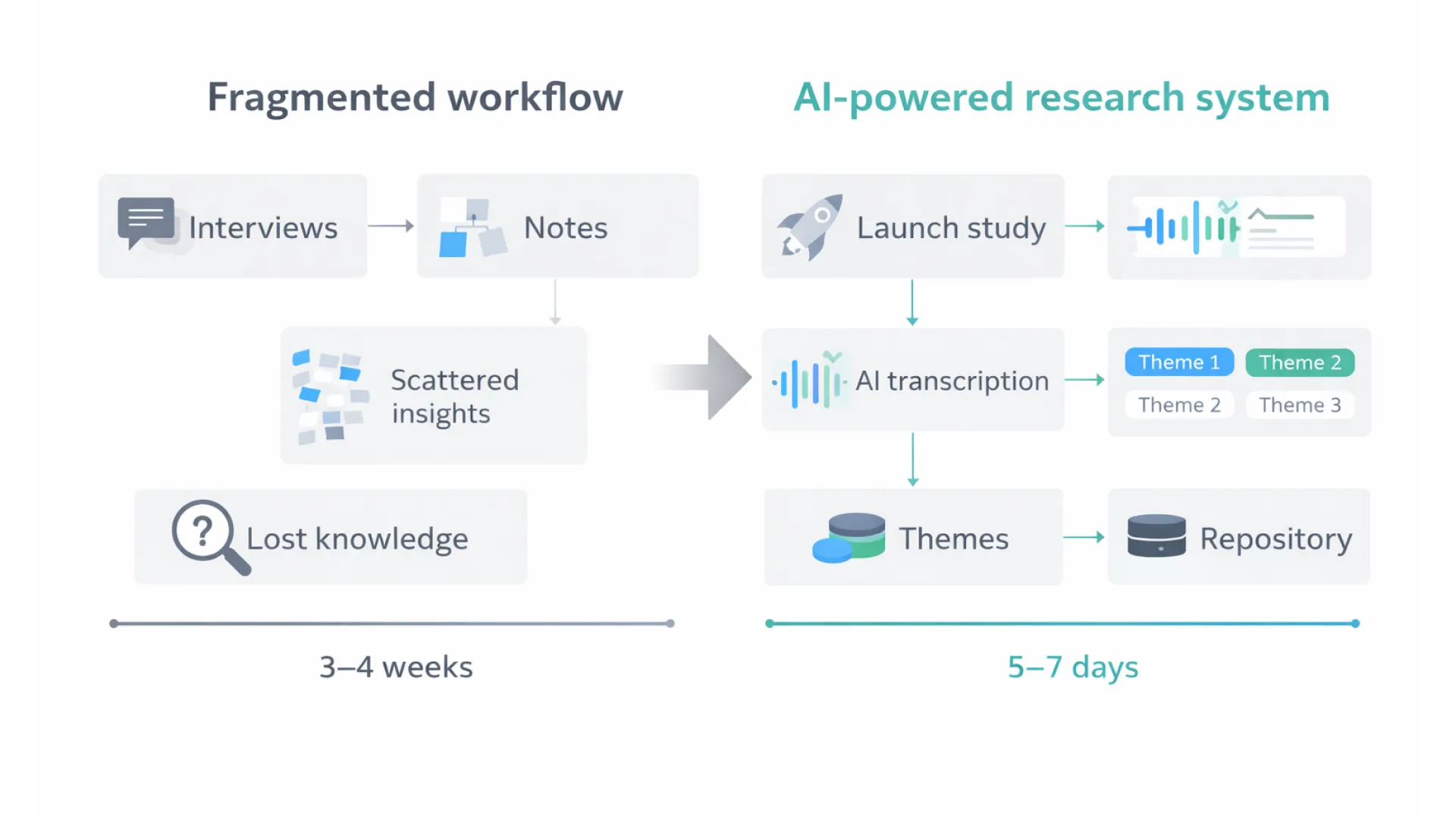
The organization generated substantial user knowledge, but in a fragmented way. Each team had its own approach to interviewing, note-taking, and sharing insights — making research slow, siloed, and hard to reuse.
The challenge wasn’t just technological — it was about trust. Could we make AI integrate naturally into research workflows without adding friction, replacing human judgment, or forcing teams to abandon their habits?
Key Constraints
- No dedicated PM for the design workstream — I took ownership of translating research needs into product requirements: writing user stories, facilitating alignment, and defining the UX roadmap alongside the research team.
- AI skepticism — teams worried AI would “black box” insights. Solution: every summary links to source quotes, every theme shows evidence.
- 2 engineers part-time — we shipped MVP in 6 weeks (transcription + summarization + basic repository) instead of waiting 6 months for the “complete” product.
- Cultural resistance — teams had their own workflows. Solution: AURA integrates with existing tools; it enhances, it doesn’t replace.
Approach & Decisions
Working closely with the User Research team, we started with one question: what do internal teams need to trust AI insights day-to-day? Conversations with PMs, Support, and Customer Success revealed three needs: transparency in how insights are generated, accessible knowledge (not trapped in documents), and speed without sacrificing context.
Key decision #1. The project was initially scoped as a “transcription tool.” Research with internal users showed transcription was table stakes — the real value was connecting insights across studies. The team pivoted to a repository-first experience. I championed this shift from a UX perspective, designing how a living repository could surface patterns across past research in an intuitive way.
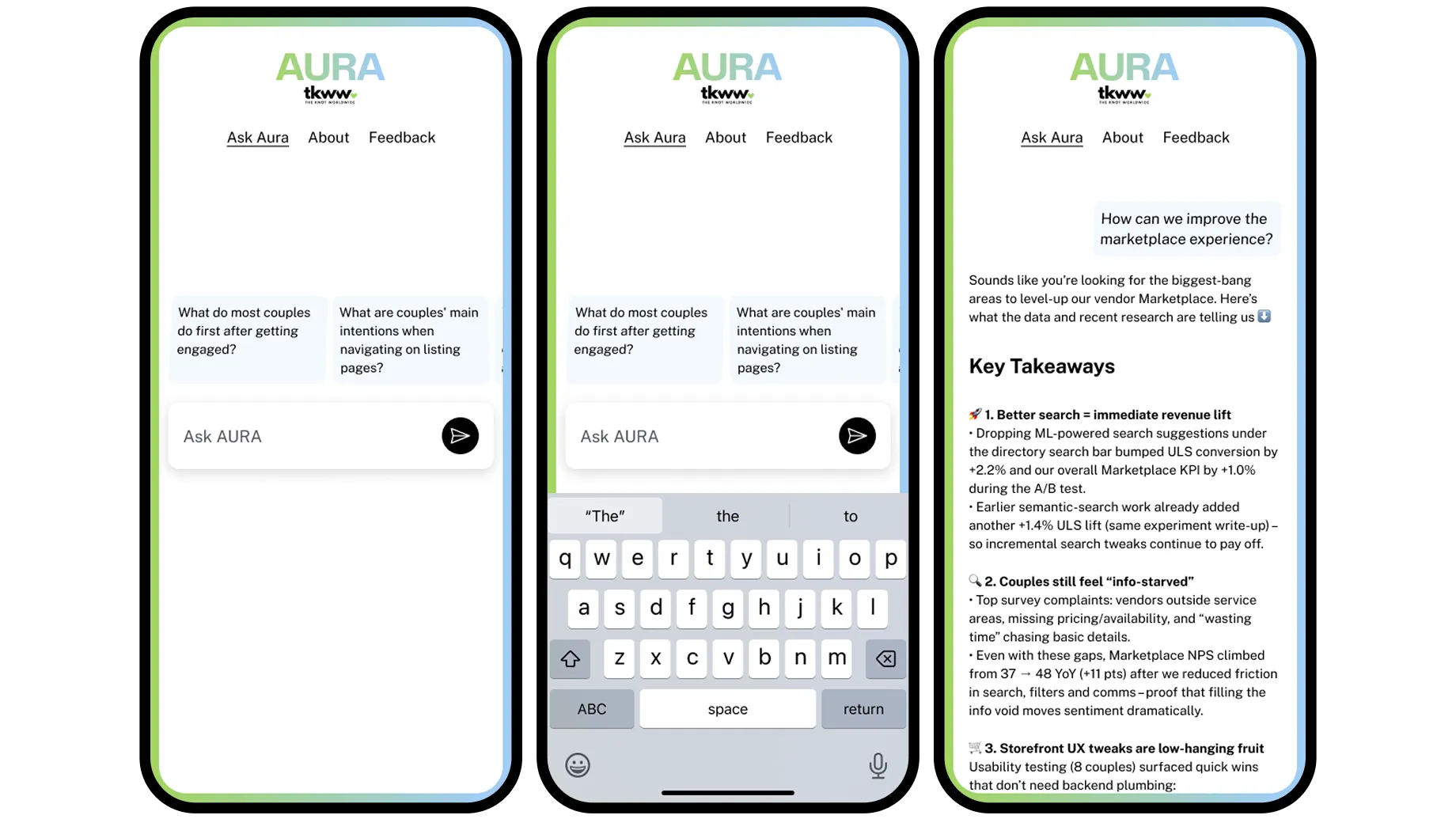
Key decision #2. Instead of presenting AI as a “magic” layer, I designed small moments of contextual help — suggested next steps, meeting summaries, cross-study theme connections. The principle: AI should feel helpful, not mysterious. This design direction shaped how the entire team thought about AI integration.
The Solution
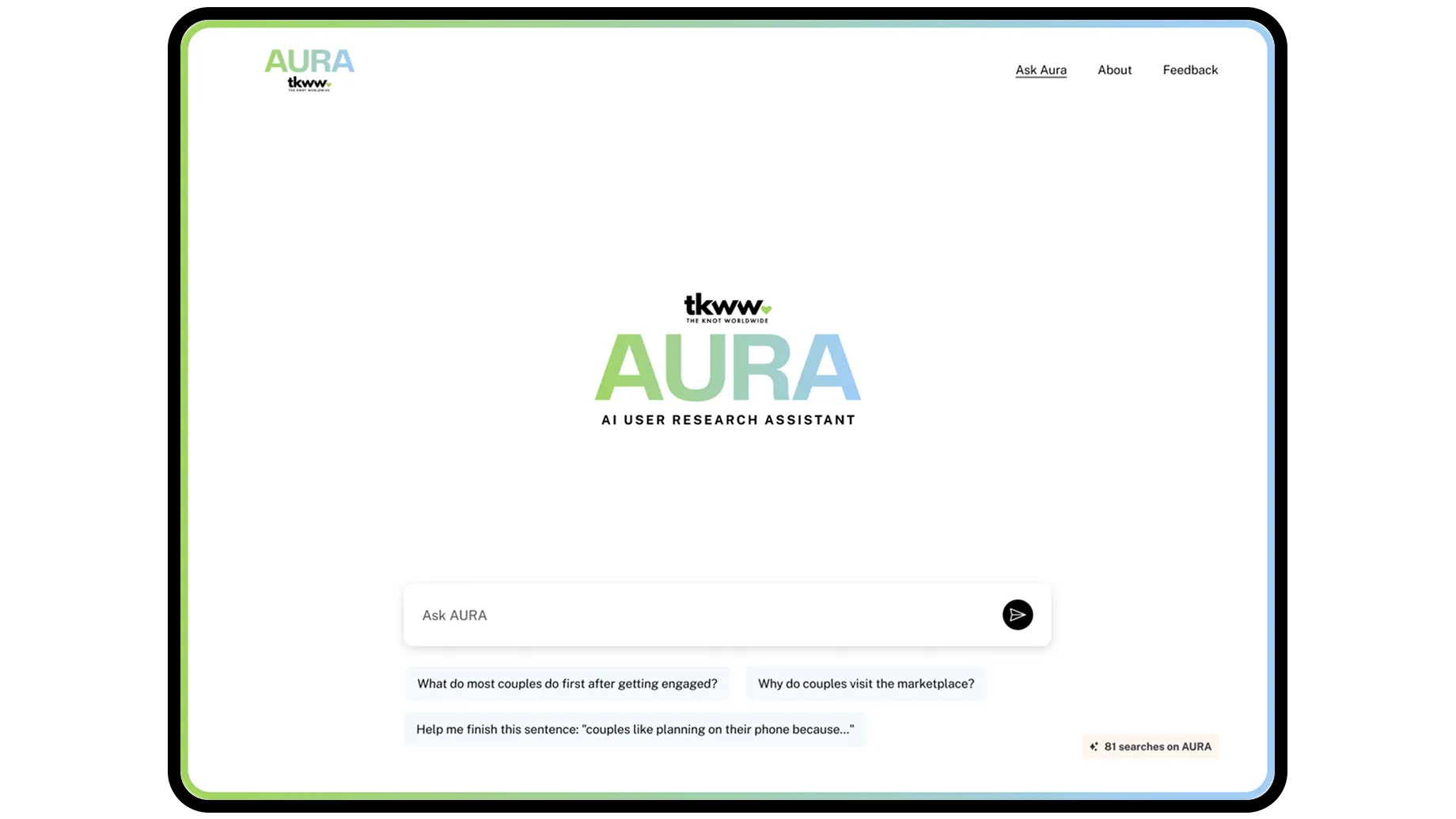
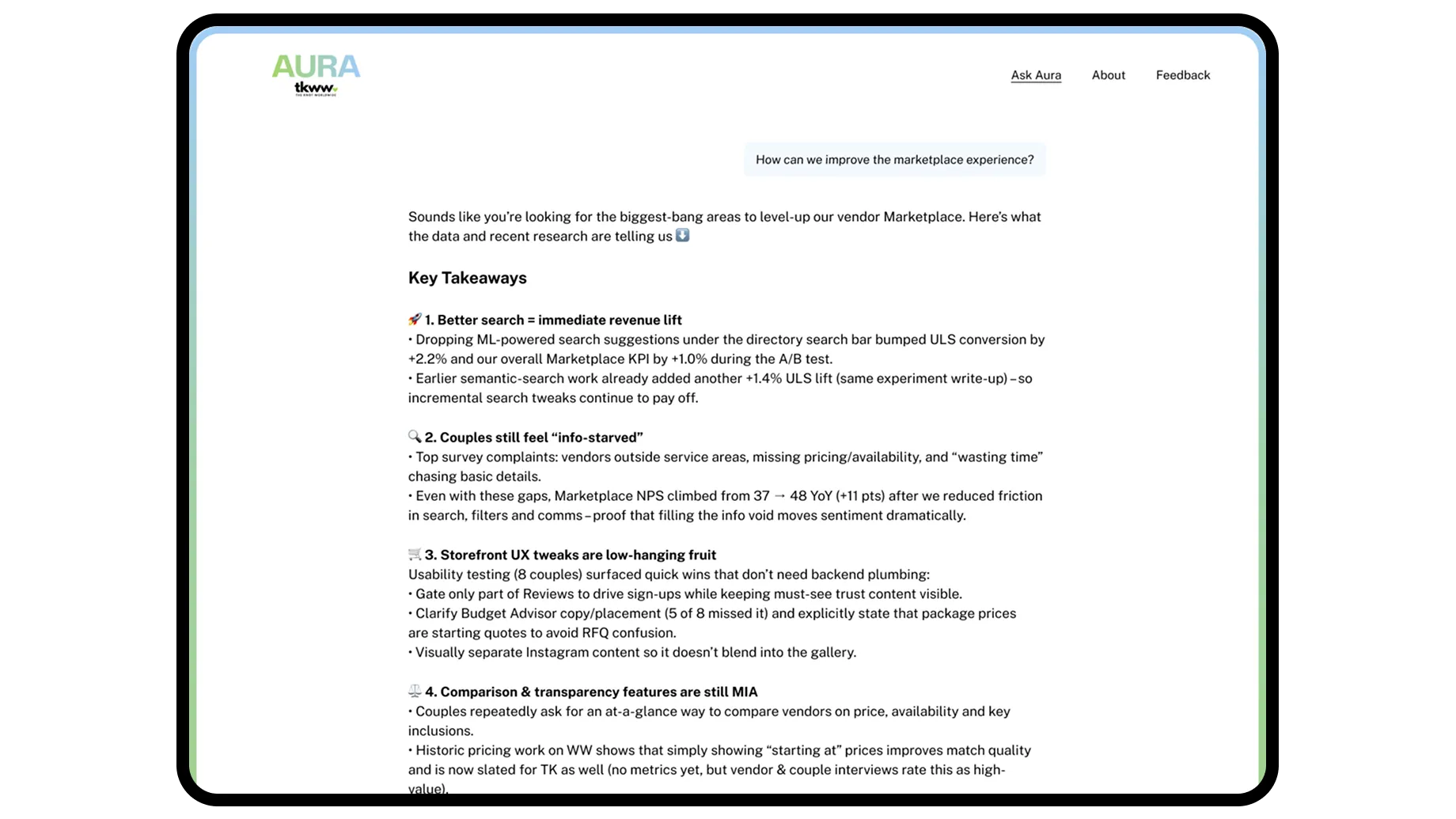
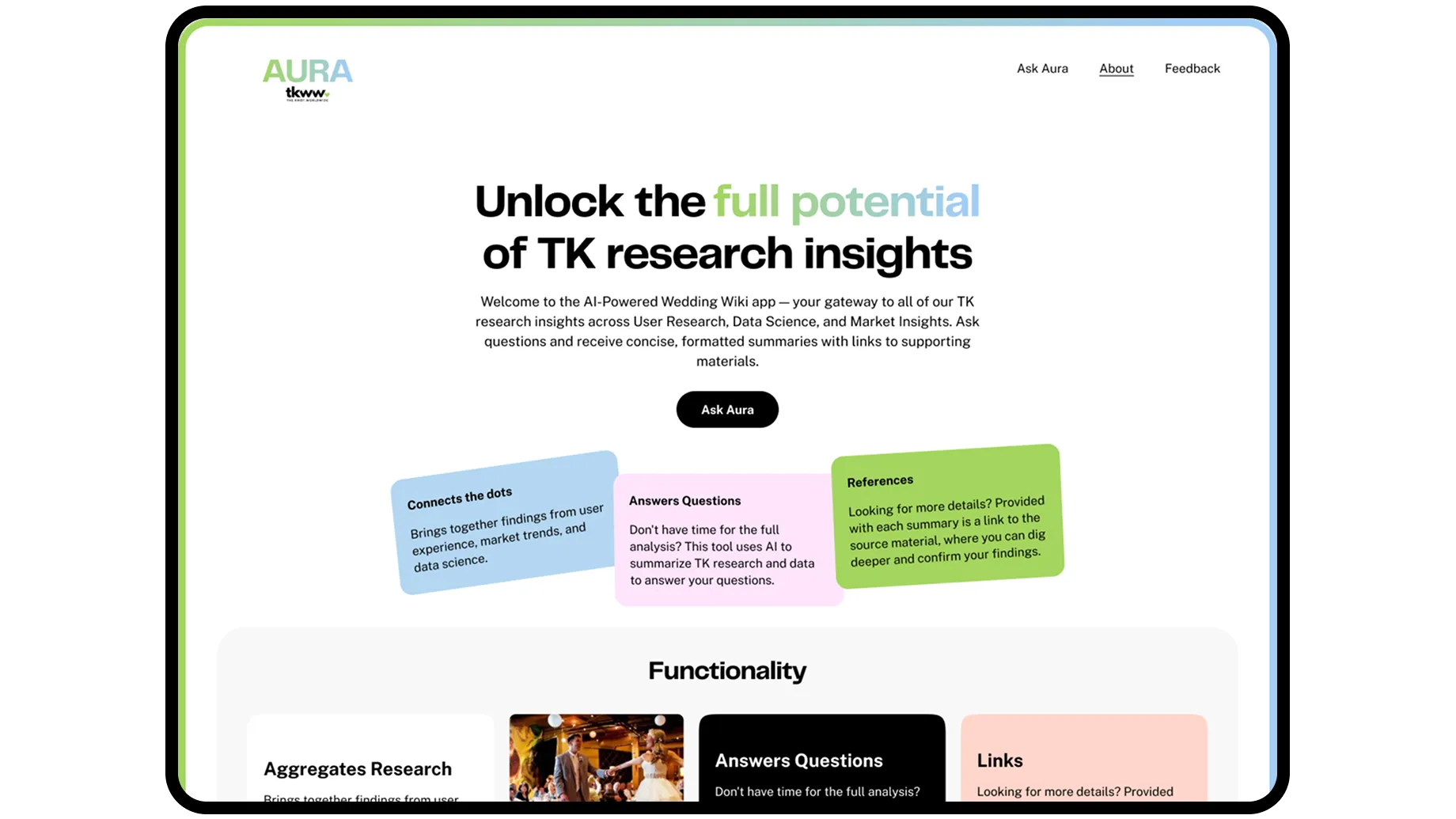
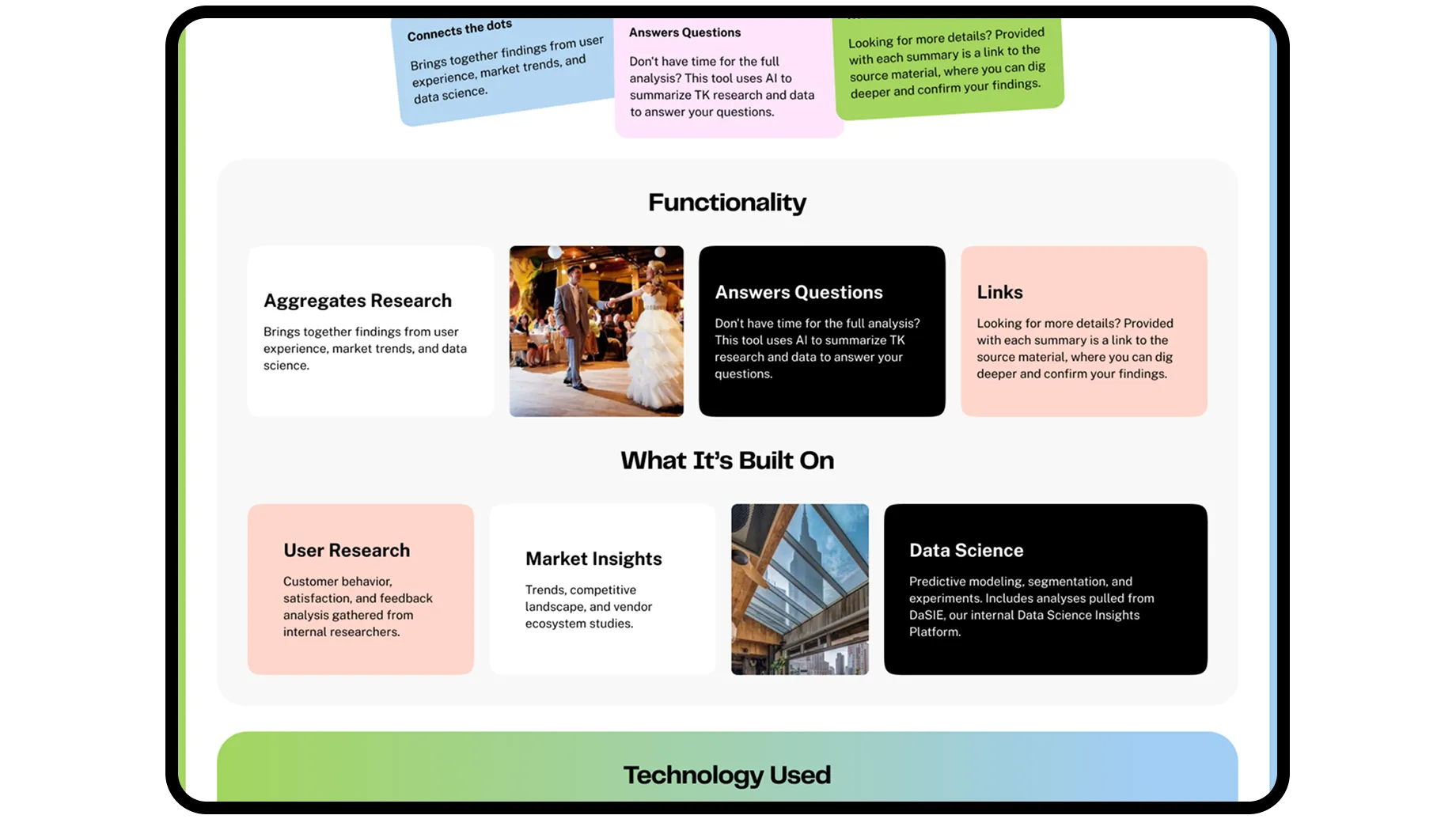
AURA starts with a dashboard showing active studies, recent insights, and documented decisions. Launching a new study is a guided flow — define objective, participant type, and channel, while AI suggests questions and formats.
Once sessions are recorded, AI handles transcription, summarization, and theme grouping — offering views adapted by user type: executive summaries for leadership, granular detail with quotes for researchers. I designed the information architecture so users never lose context: every insight traces back to its source, every decision links to the learnings that justify it.
Results
- Research cycle reduced from 3-4 weeks to 5-7 days
- Insights reuse increased ~60% with a centralized AI repository
- Non-researchers (PMs, Support, Ops) now launch studies independently
- Teams stopped repeating studies and started building on past learnings
What I Learned
- Trust over magic — showing AI sources and confidence levels drove adoption more than any feature.
- 10x value or die — cutting research from weeks to days was the only threshold that mattered.
- Cultural change beats interface design — 30% of the project was workshops and demos, not screens.